
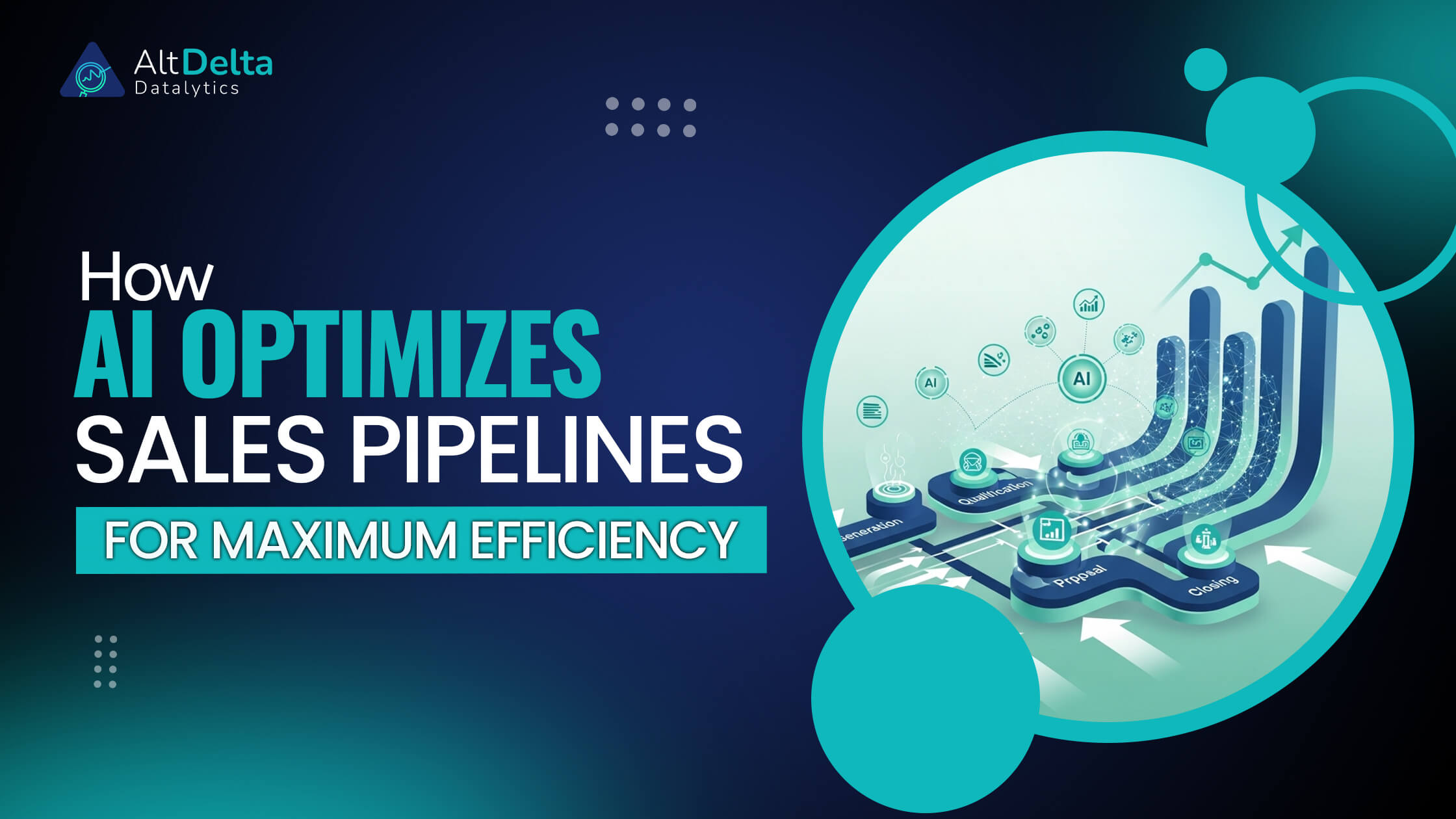
How AI Optimizes Sales Pipelines for Maximum Efficiency?
In today’s competitive business environment, companies must manage their sales pipelines efficiently to convert leads into loyal customers. Traditional sales procedures frequently depend on time-consuming procedures, which can interfere with decision-making. By automating these laborious procedures, artificial intelligence (AI) is overall improving the sales pipelines.
Sales teams can concentrate on what really matters by using AI for lead scoring, predictive analytics, and automated follow-ups. As AI is therefore starting to play a crucial role in modern sales operations, let’s discuss in this post how it is actually optimizing the sales pipeline for maximum efficiency.
AI Improves Sales Pipeline Visibility
Businesses may see their sales funnels more clearly thanks to artificial intelligence. It is challenging to precisely measure progress in traditional systems since sales data is frequently dispersed among spreadsheets or several platforms. Platforms driven by AI gather and examine data from many sources in one location.
This enables real-time pipeline monitoring for sales managers. Better visibility allows the business to monitor sales performance and make well-informed decisions. In today’s technological world, AI ensures that no important opportunity is missed by helping businesses maintain a more transparent and well-organized sales process, which is impossible with traditional sales operations.
Smarter Lead Generation & Qualification
AI greatly enhances the lead generation and qualification process. Only a small percentage of the leads actually become their real clients in the future. To find high-quality leads that are potential clients, AI examines consumer data, including browsing habits, demographics, interaction history, and purchase trends, so that time would not be wasted on the sales potential.
Each lead is given a value based on its conversion potential using AI-driven lead scoring. Instead of wasting time, sales teams may then concentrate on leads with the highest scores. This focused strategy boosts productivity, saves time, and raises the likelihood that leads will become paying clients.
Predictive Analytics for Better Sales Decisions
One of the most useful AI features for managing sales pipelines is predictive analytics. AI systems examine past consumer interactions and sales data to find trends for better future results. Businesses may use this information to determine which prospects might need more attention and become a better deal in the future.
Sales managers may enhance pipeline management by allocating resources appropriately. Teams may also use predictive data to determine when prospects are ready to buy and what tactics could sway their choices. By taking a proactive stance, companies may enhance their entire sales performance and make more informed judgments.
Personalized Customer Engagement
Businesses can provide individualized experiences throughout the sales process thanks to AI. Customers today want communications that are specifically customized to their requirements and interests. AI systems examine prior encounters, browsing habits, and consumer preferences to determine what each prospect could be searching for.
A sales representative can utilize this data to develop offers, personalized communications, and product suggestions. Personalized interaction boosts response rates and fosters consumer confidence. Prospects are more likely to stick with a brand when they get meaningful and pertinent information, which eventually raises the possibility of successful conversions.
Automation of Repetitive Sales Tasks
Updating client information and sending regular emails are examples of repetitive duties that many sales representatives spend valuable time on. Automation technologies with AI capabilities can effectively manage these tasks without much hassle. This way, the percentage of human error is also reduced, as the AI-generated error probability is very low. AI systems are capable of tracking interactions, and automatically updating CRM platforms.
Chatbots may also communicate with prospective clients, respond to frequently asked questions, and gather lead data. Instead of handling repetitive operations, this automation frees up sales teams’ time to focus on developing connections, comprehending client demands, and completing transactions.
Accurate Sales Forecasting
By examining vast amounts of information and seeing patterns that people might miss, AI enhances sales forecasting. Conventional forecasting techniques sometimes rely on gut feeling or insufficient data, which can result in forecasts that are off. In order to more precisely project future revenue, AI models look at historical sales performance, market circumstances, and consumer behavior.
Businesses may better plan their operations, such as recruiting, budgeting, and inventory management, with accurate planning. Additionally, early detection of any hazards or holes in the pipeline allows sales executives to modify their plans.
Real-time Sales Insights
Real-time information from AI-powered solutions enable sales teams to react swiftly to shifting consumer behavior. AI systems are able to identify when prospects exhibit heightened interest by continually tracking interactions like email engagement, website visits, and product questions. Alerts and suggestions on when to follow up with prospective clients are delivered to sales representatives.
These insights increase the likelihood of successful conversions by enabling firms to interact with prospects at the appropriate time. Additionally, real-time data enables businesses to recognize new possibilities or obstacles in their pipeline, allowing them to swiftly adjust their tactics for sustainable sales.
Stronger Alignment Between Sales & Marketing
AI facilitates better communication between marketing and sales teams, which is crucial for a productive sales funnel. Although they frequently function separately, both departments depend on reliable consumer data to be successful. Customer relationship management solutions with AI capabilities consolidate data and provide both teams access to common insights.
Sales teams may examine customer feedback and conversion rates, while marketing teams can monitor which initiatives provide the most quality leads. Businesses may improve their tactics and more successfully target the appropriate audiences with the help of this partnership.
Conclusion
Businesses’ methods for managing and streamlining their sales pipelines are being completely transformed by artificial intelligence. AI helps sales teams operate more productively and make better decisions by automating tedious processes, evaluating massive amounts of information, and offering predictive insights. AI improves every step of the sales process, from finding excellent leads to increasing forecasting accuracy and providing tailored client experiences.
AI-driven sales tools will grow in sophistication and value as businesses continue to use cutting-edge technologies. By simplifying procedures, boosting productivity, and closing agreements more quickly, businesses that adopt these advances gain a competitive edge.

Author: Zeeshan Baber
Mr. Zeeshan Baber is an experienced professional in the IT services and management sectors. He holds Master of Business Administration degree and is a certified anti-money laundering professional and internal auditor. For over a decade; He has worked with leading banks in various senior capacities, providing services in AML/CFT regimes, trainings, banking, and financing. Along with it, he is a certified internal control auditor from CICA – USA. Being the owner of diversified skillset, He is also a technological geek which has derived his passion for providing services for strategic management, solution implementation, chalking our innovations, onboarding clients, broadening business development in the IT sector.

